Why Building Construction Companies Need Site Surveys
Read Article
→

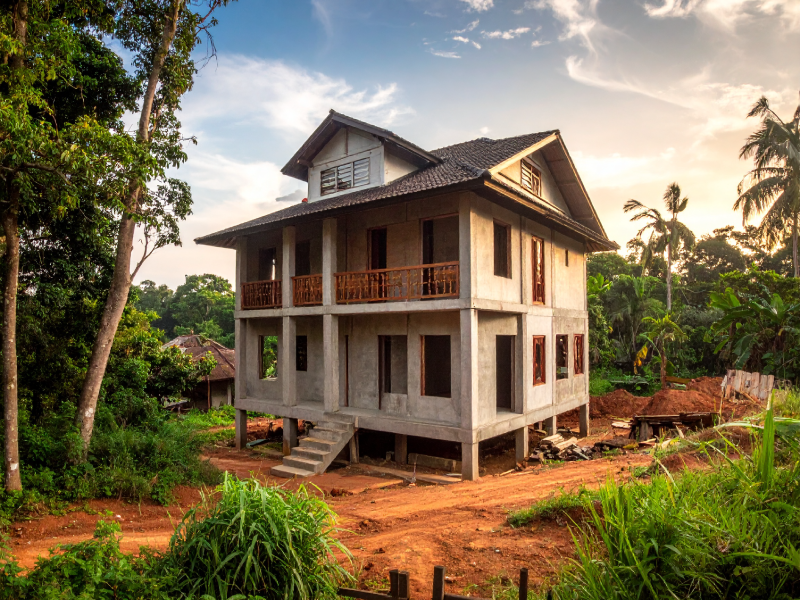
Building a house in Sri Lanka is more than just a financial investment; it is a profound commitment to establishing a lasting home. It’s an undertaking that requires careful planning, foresight, and consideration of the unique environmental challenges posed by the country’s tropical setting. Sri Lanka’s climate brings an intoxicating mix of high heat, relentless humidity, and, crucially, intense, heavy rainfall during the annual monsoon seasons. This combination is a silent, persistent enemy of conventional building structures.
The necessity of informed decisions cannot be overstated. Without foresight, hidden issues or structural flaws, such as insidious water ingress, foundational instability, or material degradation, commonly begin to surface within the first ten years of a building’s life.
The goal of this article is to move beyond surface-level aesthetics and outline the crucial monsoon-proof construction techniques used by Crystal Construction Company in Sri Lanka to ensure long-term durability, structural integrity, and safety against water damage and leaks, ultimately protecting your investment for generations.
The strength of a house is directly proportional to the resilience of its foundation. In a tropical island environment, where soil conditions can be volatile and precipitation is heavy, a ‘good’ foundation must be an intelligent foundation.
The ground beneath your home plays a gigantic role in its long-term durability. You cannot design a foundation effectively without first understanding the medium it rests on. A thorough soil test is therefore non-negotiable. This test determines the soil’s quality, its load-bearing capacity, and its suitability for construction at your specific site. Are you on loose, sandy sediment near the coast? Is it heavy, expansive, clay-rich inland earth? The foundation must be designed specifically to handle these site conditions and, critically, to manage the massive hydrostatic pressure created by water saturation during the monsoons.
Sri Lanka’s diverse terrain, from sandy coastal soils to the more compact central highlands, deeply influences foundation choices. The heavy monsoon rains can lead to rapid waterlogging, soil saturation, and erosion, which can compromise stability if the wrong type of base is chosen.
For coastal areas, where groundwater is high and saltwater intrusion is a risk, a pile foundation is often the best choice. Piles penetrate deeper into the earth to rest on stable bedrock, effectively bypassing the unstable surface layers and providing superior resistance to both erosion and salt damage. Inland, even a raft or strip foundation requires meticulous design to handle saturation. In all cases, stress the importance of investing in high-quality foundation materials, such as densely mixed, reinforced concrete, to ensure maximum stability and longevity. This initial, higher cost is the most impactful insurance policy you will ever buy for your home.
Inadequate drainage is arguably the leading cause of water-related damage in Sri Lankan properties. If water is allowed to pool and saturate the soil around the perimeter, it can undermine even the sturdiest foundation. You must install proper drainage systems, including perimeter drains, French drains, and adequate grading (sloping the earth away from the house), to ensure rainwater flows quickly and completely away from the building’s base. Good drainage systems are essential to mitigate the effects of relentless monsoon rains, which can cause severe water accumulation and foundational stress.
Once the base is secure, the next structural priority is creating an impervious shell. Faulty waterproofing and inadequate drainage are the primary causes of water damage and leaks, which ultimately result in destructive mold growth, costly maintenance, and a weakened structural integrity over time.
Waterproofing should be applied to all vulnerable areas, including the roof, walls, wet areas (bathrooms), and even the basement or underground floors. Modern technology offers a range of superior solutions. While traditional tar-based methods exist, high-performance liquid-applied membranes, bituminous sheets, or crystalline coatings can provide superior protection against moisture infiltration. These systems are specifically designed to handle the thermal expansion and high moisture load of a tropical environment.
A durable roof is the first line of defence in monsoon-proof construction Sri Lanka. Roofing costs vary significantly, but choosing durable options is crucial for longevity against local weather patterns. For pitched roofs, high-quality, durable roofing tiles or well-installed metal sheeting are standard. For flat roofs, a robust, multi-layer waterproofing membrane must be applied. Always ensure proper slope (minimum 1:50) is maintained to prevent standing water, which accelerates material degradation.
In a tropical climate like Sri Lanka, effective insulation is indispensable, not just for heat, but for moisture control. Insulation helps maintain a comfortable indoor environment and, vitally, prevents moisture retention and condensation, which are primary drivers of mould and mildew. Traditional materials like fibreglass can be prone to moisture retention and mould growth if not installed perfectly. Explore closed-cell options or reflective foil barriers combined with proper ventilation to manage heat and humidity effectively.
Climate-specific material requirements are paramount. Sri Lanka’s tropical climate demands materials that can withstand high humidity, intense heat cycles, and heavy rainfall without rapidly degrading.
Opt for materials known for their water resistance. This includes high-grade, low-permeability concrete, which prevents water absorption, and rust-proof metals (like galvanised or stainless steel) for reinforcement and fittings. Prioritising durability over cost is a cardinal rule. While cheaper materials may reduce initial construction costs, they invariably lead to frequent, high repair costs in the long run.
Monsoon-proof construction is not just about materials; it’s an architectural discipline. Designs must be expertly tailored to manage and minimise the effects of high temperatures, humidity, and torrential rainfall.
Modern, resilient design should also incorporate sustainability. Explore sustainable energy solutions like solar panels or rainwater harvesting systems. Rainwater harvesting not only reduces your water consumption and waste but also helps manage stormwater runoff on your property, reducing the volume of water impacting your foundation during a downpour.
The best materials and design plans can be undermined by poor execution. Success hinges on the right team.
Working with a construction company or contractor familiar with the local landscape is crucial. A local expert understands the specific microclimates, weather patterns that affect construction timelines and can navigate local supplier networks and regulations efficiently. They possess the tacit knowledge of what has failed and, more importantly, what has consistently succeeded in the Sri Lankan context.
Construction projects in Sri Lanka can face unpredictable delays due to the intensity and timing of monsoon seasons, as well as material import regulations. A reputable, experienced construction company will factor in potential delays, utilise efficient project management techniques, and coordinate material delivery to minimise exposure to poor weather, ensuring your project stays on track.
Budget overruns are a common pitfall in all construction, exacerbated by unexpected weather damage. Develop a highly detailed budget that specifically includes a contingency fund. A recommended 10–20% of the total budget should be set aside for unexpected expenses, such as unforeseen foundational work, material price hikes, or monsoonal rain delays. This buffer is essential for peace of mind.
Prioritising quality construction is not merely a preference; it is a strategic and necessary move that ensures the safety, security, and long-term durability of your home, especially against the relentless natural elements like heavy rains and winds.
Building a truly monsoon-proof construction in Sri Lanka requires a multi-faceted approach: attention to strong foundations, advanced waterproofing, climate-appropriate material choices, and thoughtful architectural design. By partnering with experienced professionals who understand the nuances of tropical building and by making smart, informed decisions rooted in engineering resilience, homeowners can ensure their project not only stands tall but also becomes a durable, long-lasting construction, a true legacy that successfully withstands the test of time, weather, and climate.