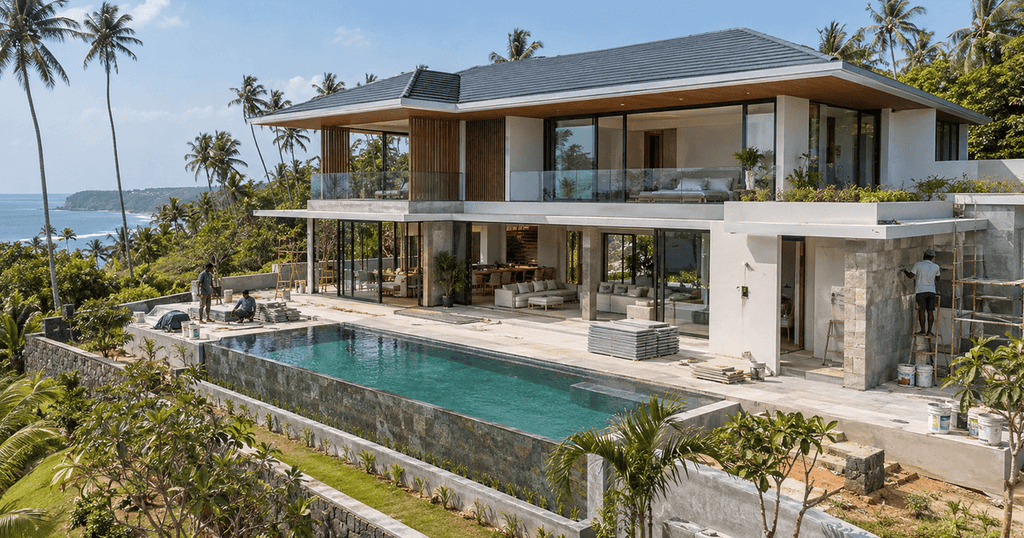
Best Questions to Ask Construction Companies in Sri Lanka
Selecting the right partner for your building venture, be it a high-end commercial facility, a boutique resort, or a bespoke luxury villa, is the single most significant decision you will make. In a dynamic market like Sri Lanka, the chasm between a professional, reputable firm and a problematic, inexperienced contractor is vast. A smart choice guarantees quality, adherence to complex Sri Lanka building codes, and a predictable financial outcome. A poor choice can lead to delays, stress, and cost overruns.
To safeguard your investment and guarantee a stress-free construction journey, you need a rigorous due diligence process. This is the definitive checklist of the ten most crucial questions, designed for the sophisticated investor, to put prospective construction companies in Sri Lanka under necessary scrutiny.
Foundational Expertise & Legal Compliance
Before discussing blueprints or budgets, you must confirm the company’s bedrock: its history and its adherence to the law.
1. What is your experience, reputation, and proven track record with projects similar to mine?
Experience is not just about time in business; it’s about relevance. A company that has built 50 small homes may not be suited for a large-scale, complex resort.
- The Specifics: Inquire how long the company has been operating and, crucially, demand a portfolio that specifically matches your project’s size, scope, and quality level, such as previous luxury construction Sri Lanka projects.
- The Proof: Don’t rely on photos alone. Check their reputation by reviewing past work, seeking independent client recommendations, and checking third-party testimonials. Positive, verifiable feedback is a strong indicator of a truly reputable construction company Sri Lanka.
2. Are you fully licensed and insured, and how do you ensure compliance with local building codes?
Legal and regulatory compliance is non-negotiable. It’s the essential safeguard against legal complications and future demolition orders.
- The Safeguard: Verify the company holds all required licenses and insurance from the relevant Sri Lankan authorities. Insurance protects you from liability in case of site accidents or property damage.
- The Local Knowledge Test: Confirm the company is intimately familiar with and strictly adheres to all current Sri Lanka building codes, zoning laws, and safety standards. Building in Sri Lanka requires specific permits. Ask how they navigate and secure these Sri Lankan building permits efficiently.
Financial Transparency and Contractual Security
Cost is often the primary driver, but transparency is more critical than a low initial price. Protect your budget against the all-too-common hidden charges.
3. Can you provide a detailed, itemized quotation that breaks down all projected costs?
A single lump sum quote is a red flag. True cost transparency is paramount to understand the full financial commitment and the true cost of construction Sri Lanka.
- The Line-Item Rule: The quote must itemize costs for materials, labor, permits, overheads, and fees. This level of detail allows for fair comparison between bids and helps you track spending.
- The Skeptic’s Warning: Be highly suspicious of unrealistically low bids. In the Sri Lankan construction industry, this often signals the “bait-and-switch” tactic, leading to massive, unexpected charges for essential, yet unspecified, work later in the project.
4. How do you manage potential budget overruns, and what contingency plan do you include?
Unexpected expenses, be it fluctuating material prices, unforeseen site issues, or design tweaks, are a reality of construction globally. A prepared contractor budgets for this.
- Cost Control Strategy: Ask for a clear, written explanation of their cost-control methods. How do they lock in prices? How often is the budget reconciled?
- The Contingency Fund: A professional contract must include a contingency fund, a reserve of capital (typically 10%–20% of the total project budget is a prudent recommendation) to cover unforeseen challenges. Confirm this amount and how it is managed.
5. What is the realistic timeline for completion, and how do you manage potential delays?
Setting a realistic timeline that accounts for local factors, especially the variable monsoon seasons and material import lead times common when selecting a Sri Lankan contractor, is vital for a foreign investor’s planning.
- Timeline Commitment: Demand a commitment to a realistic timeline and ensure the contract outlines clear project milestones. For security, ask if the contract includes penalties for unexcused, contractor-caused delays.
- Mitigation Strategy: Inquire about their explicit plan for handling common Sri Lankan challenges, such as unexpected weather events or supply chain disruptions, to keep progress on track.
Execution Quality, Communication, and Specialization
The best intentions mean nothing without excellent execution and clear, reliable communication.
6. What communication channels do you use, and who is my primary point of contact?
Poor communication is the silent killer of construction projects. Misunderstandings lead to rework, delays, and frustration.
- Contact & Consistency: Establish your expectations for communication frequency (e.g., weekly progress reports) from the outset. Crucially, identify one primary point of contact (a dedicated project coordinator).
- Bridging the Gap: For international clients, ask if they provide bilingual project coordinators. This can be invaluable in bridging language, regulatory, and cultural gaps, ensuring your vision is accurately translated to the site team.
7. How do you ensure high-quality workmanship, and what standards do you follow for materials?
Quality must be ensured from the foundation up, especially given Sri Lanka’s challenging tropical climate (high heat and humidity). This directly impacts the structure’s longevity.
- Climate-Proofing: Inquire specifically about their materials strategy to combat the climate. Do they prioritize water-resistant concrete, use high-grade insulation to reduce cooling costs, and specify UV-protected finishes?
- The Warranty: Ask about their quality control measures, including regular inspection schedules, and what warranties they offer on workmanship and materials post-completion.
8. What is your commitment to sustainable practices and incorporating innovative building technology?
Sustainability is a powerful global trend, but it also translates to lower long-term operating costs and higher property valuation.
- Eco-Strategy: Ask how they incorporate eco-friendly practices, such as rainwater harvesting, passive solar design (maximizing natural light/airflow), or using local, recycled, and sustainable materials.
- Future-Proofing: Inquire about experience with technologies like Building Information Modelling (BIM), which improves design accuracy, or integrating smart-home features (IoT sensors) for better energy management. Ask if they have experience working towards Green Building Certifications (e.g., LEED or EDGE).
9. Do you have specific local expertise in my project area (e.g., Galle or Colombo)?
Local knowledge is not a luxury; it’s a necessity. Sri Lankan construction is heavily influenced by geography and specific local regulations.
- Regional Nuance: If building in Sri Lanka in a coastal region like Galle, ask about their expertise in mitigating coastal challenges like saltwater intrusion or erosion. In Colombo, regulatory speed and logistics are different.
- Permitting Mastery: A good local contractor has a streamlined process for navigating specific regional regulations, such as environmental clearances or adhering to unique heritage preservation laws that might impact design.
10. What are the qualifications of your key team members and what is your specialization?
You are not just hiring a company; you are hiring a team of professionals. The expertise of the architects, engineers, and project managers is fundamental.
- Team Credentials: Inquire about the qualifications and direct experience of the key personnel. For specialized projects (e.g., unique contemporary design), ensure they partner with architects and engineers who excel in those specific techniques.
- Specialization Alignment: Confirm the company’s core specialization, are they primarily residential, commercial, or luxury home builders? Ensure their expertise aligns perfectly with the demands of your project before signing the contract.
Conclusion: Prioritizing Partnership Over Price
The process of selecting a Sri Lankan contractor is more like choosing a long-term business partner than simply hiring a vendor. When assessing bids, remember this key truth: the cheapest initial quote is rarely the lowest final cost. Our team at Crystal Construction Company ensures that we are transparent with customers, even though some choose to go with the lowest quote.
By applying this rigorous checklist, you move beyond surface-level quotes and can evaluate prospective construction companies in Sri Lanka on the basis of expertise, integrity, and operational transparency. A partner who answers these ten questions thoroughly and confidently is the one who will help you turn your vision into a successful reality, on budget and on time.