How a Construction Company in Sri Lanka Builds a Villa
Read Article
→

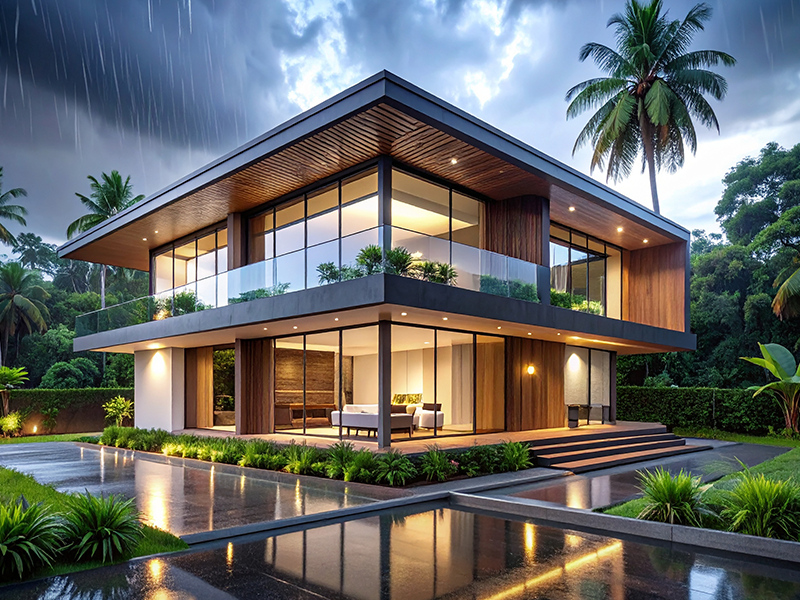
Investing in a luxury home in Sri Lanka is more than a design statement; it’s a commitment to longevity in one of the world’s most intense tropical environments. The island’s climate brings heavy monsoon rains, high humidity, and year-round heat, all of which can undermine even the most beautiful structure if not addressed through climate-aligned design and renovation.
For owners of villas, resorts, or cabanas, monsoon-proofing is not a cosmetic fix; it’s a strategy to protect structural integrity, reduce long-term maintenance costs, and preserve luxury value. The first decade of a building’s life often reveals hidden weaknesses, making proactive renovation essential to protect your investment.
Sri Lanka’s tropical climate is unforgiving to average construction. Poorly built homes quickly show cracks, leaks, and deterioration. Understanding how the environment affects your property is the first step toward durable luxury.
Common issues in unprotected structures include,
Sri Lanka’s weather is governed by four distinct rainy periods. Each tests different parts of a building,
| Season | Months | Rainfall Pattern | Impact on Property |
| First Inter-Monsoon | Mar–Apr | Intense evening thunderstorms (78 mm in Jaffna to 700 mm in the southwest slopes) | Test roof gutters, surface drainage, and sealing. |
| Southwest Monsoon (Yala) | May–Sep | Up to 3,000 mm in the central hills, >1,600 mm along the west coast | Prolonged saturation can destabilize foundations. |
| Second Inter-Monsoon | Oct–Nov | Sudden heavy downpours, 750–1,200 mm rainfall | High lightning activity, flash flooding risks. |
| Northeast Monsoon (Maha) | Dec–Feb | Primarily affects the north and east, ~900 mm average | Demands reliable roofing and wind resistance. |
Recent meteorological studies show a trend toward heavier rainfall bursts in shorter durations, meaning drainage systems must now be oversized and engineered for rapid runoff.
Effective monsoon-proofing begins with three critical systems:
Improper drainage is responsible for over 70% of water-related damage in Sri Lankan properties. Robust design starts below ground:
Crystal Construction’s renovation teams use geo-technical soil testing before major restoration projects to ensure that the foundation and subsoil drainage can handle monsoon intensity.
Luxury means longevity. Selecting materials designed for the island’s tropical demands ensures long-term performance.
Crystal Construction Company, a leading renovation contractor in Sri Lanka, emphasizes certified materials and vendor transparency to eliminate counterfeit or subpar products that often plague the luxury market.
Your home’s outer shell, the roof, walls, and openings, is the primary defense against monsoon impact.
These techniques align with Sri Lanka’s Sustainable Housing and Construction Roadmap, which promotes eco-adaptive architecture designed for long-term resilience.
The success of a renovation or villa construction project depends on your contractor’s expertise, transparency, and climate literacy.
By combining structural reinforcement, premium materials, and expert craftsmanship, your property can stand firm through every monsoon, a symbol of refined living and enduring quality in Sri Lanka’s evolving luxury landscape.
Crystal Construction Company is one of Sri Lanka’s trusted luxury builders specializing in villa construction, cabana construction, and high-end renovation projects. With a portfolio spanning Galle, Colombo, and the central hills, the company blends engineering precision with architectural artistry to create homes built for beauty, resilience, and tropical longevity.
Contact Crystal Construction Company to design, renovate, or restore your property with monsoon-ready engineering and uncompromising craftsmanship.