Solar-Ready Homes in Sri Lanka | Crystal Construction
Read Article
→

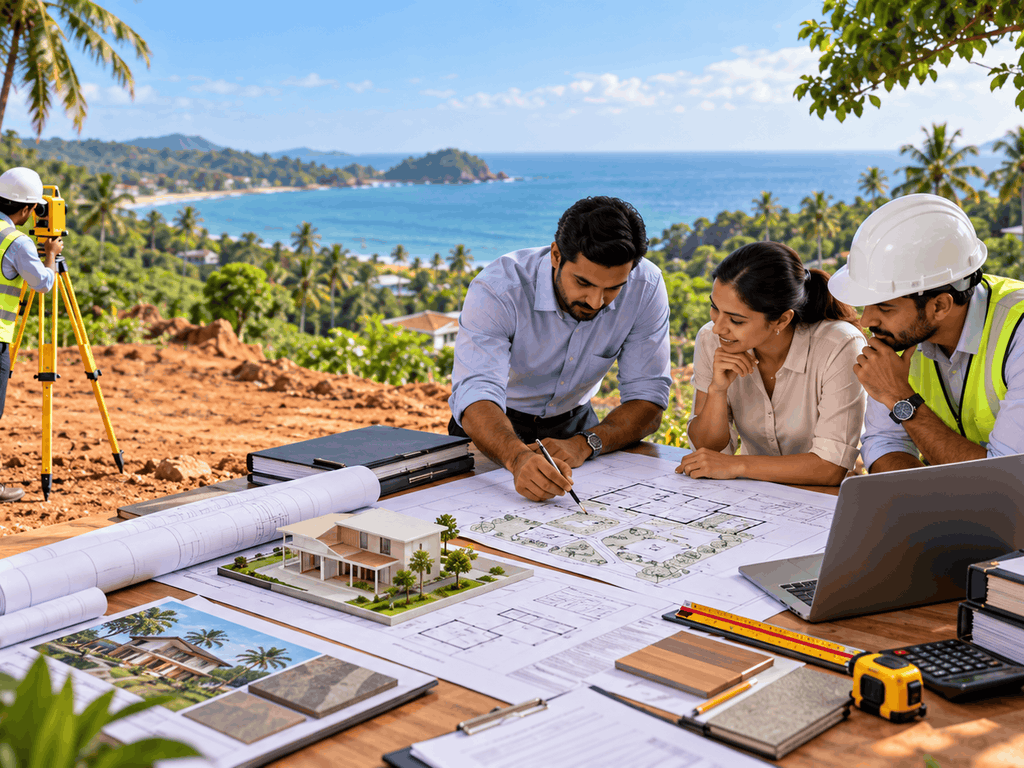
Building a home is more than just hiring a contractor and digging into the ground. Land checks, council approvals, monsoon seasons, and coastal conditions in Sri Lanka all affect the order in which work progresses. If you get the order right, the project will move smoothly. If not, you can expect to pay for errors later down the track. This guide takes you through the process of building a house from initial site inspections to hand over. We have prepared this guide for building owners, property investors, and overseas Sri Lankans looking to build and invest in property. This document can also be used as a tool to help evaluate building construction companies in Sri Lanka before engaging in work.
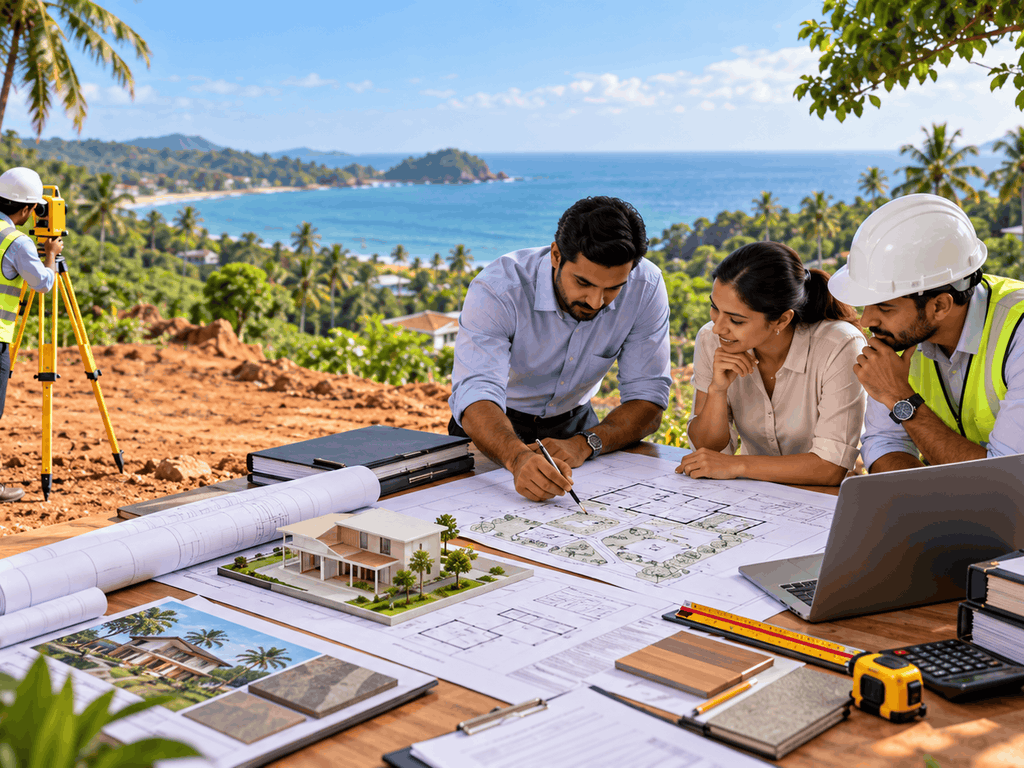
It all begins with the plot. Before starting the design process, evaluate the site for::
This is more important on the south coast. A villa is subject to sandy soil, a high water table, and salt-laden air. The perfect plot may come with hidden costs.
A good build begins with a clear brief. Number of bedrooms? Is it a family home, a holiday villa, or an investment rental? What quality of finish do you expect?
At this point, set an honest budget. Agreeing on a realistic figure early prevents costly redesigns midway through the project. For overseas clients, a detailed conversation here saves a lot of long-distance uncertainty later.
The architect turns the brief into floor plans, elevations, sections, and site layout. Good design responds to the land, the sun, the ventilation, and the views. In Sri Lanka’s climate it should work with the tropics: deep verandahs, cross-ventilation, and well-planned shade make a home more comfortable and cheaper to run.
A structural engineer then designs the skeleton of the house: foundations, columns, beams, and slabs. This is no place to skimp. Coastal and low-lying sites in particular require engineering appropriate to the ground.
A Bill of Quantities (BOQ) is a list of materials, quantities, and work items comprising the project, serving as the basis of an accurate budget and your best safeguard against vague pricing and surprise variations.
A detailed BOQ helps you compare quotes accurately. When evaluating a construction company in Sri Lanka, ask whether estimation is done in-house and how detailed the BOQ will be.
Before construction begins, the relevant local authority must approve the building plans. This may include municipal or urban council approval and further clearances in the case of coastal or environmentally sensitive areas.
Approvals can be a time-consuming process, and errors in submissions create delays. For clients living abroad, it is often the most frustrating aspect of house construction in Sri Lanka.
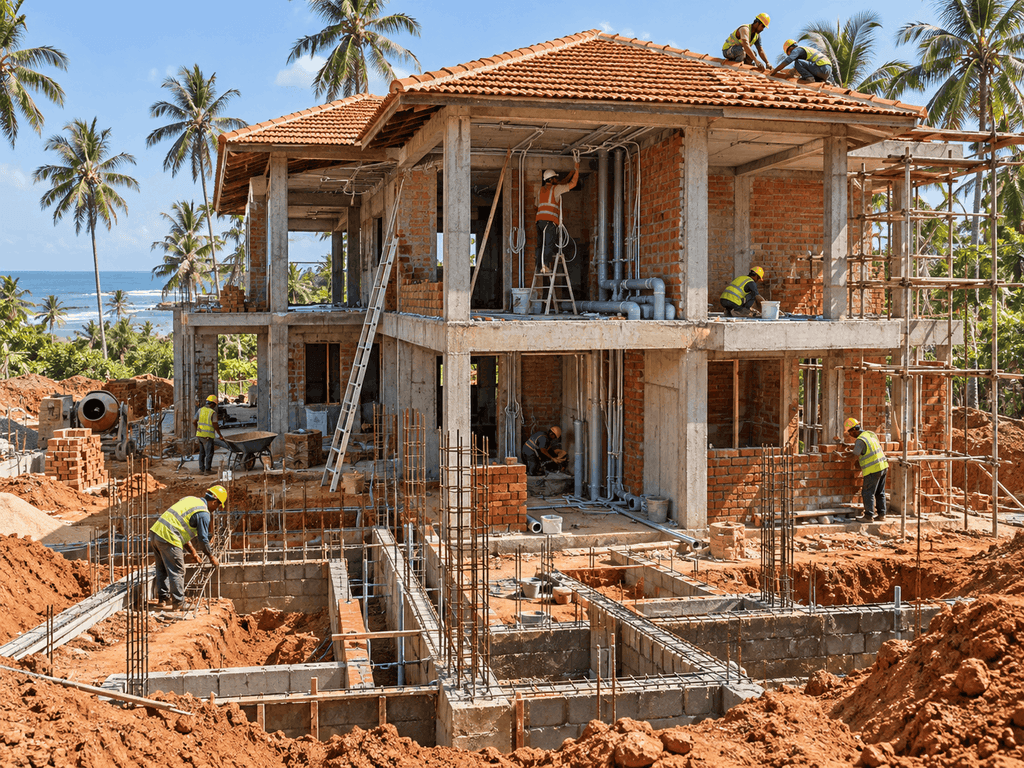
Once the project receives approval, the construction team clears, levels, and marks out the site. The construction team installs temporary boundary protection, water and power services, materials storage, and site access.
The importance of this stage is rarely visible in the completed home; however, it lays the foundation (literally) for the construction process. Careful planning at this stage can save weeks in the construction schedule, particularly if the monsoon season is taken into account.
As the foundation carries the entire load of the building, quality control is of paramount importance, and engineers should closely monitor excavation, reinforcement, concrete work, and waterproofing according to the structural plans, inspecting reinforcement before concrete pouring.
The nature of the subgrade (ground structure) on the south coast often requires more reinforcement or deeper foundations than is standard. This stage should never be rushed, as it represents the biggest cost risk on the project.
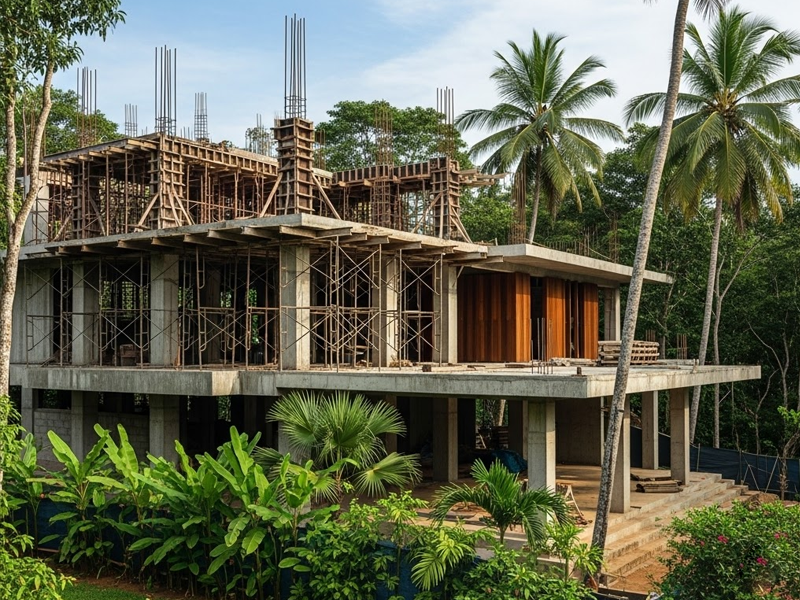
Columns, beams, slabs, and walls begin to rise to give shape to the house. The quality of steel used, the proportion of concrete mix, curing, and alignment all play a role.
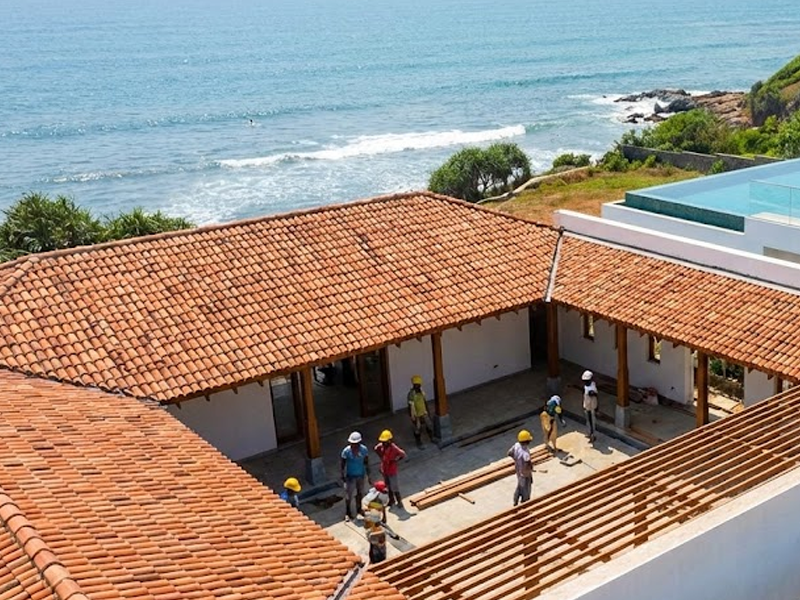
In Sri Lanka, roofs must withstand the monsoon rains as well as the searing heat of the sun and coastal humidity. Whether using clay tiles, concrete tiles, metal sheeting or a waterproofed flat roof, it’s the detailing at junctions, valleys and edges that determines longevity.
Architects and engineers should plan the roof structure, insulation, and drainage during the design stage rather than improvising on-site.
First, fix plumbing and electrical services and fit in prior to closing walls and slabs. Water lines, drainage, conduits, cabling, distribution boards, and provision for air-conditioning, security, and smart home systems need to be coordinated.
In addition, considerations such as water storage, pumps, sewage systems, and backup generators need to be factored in for a villa construction in Sri Lanka, in areas without town water supply or electricity.
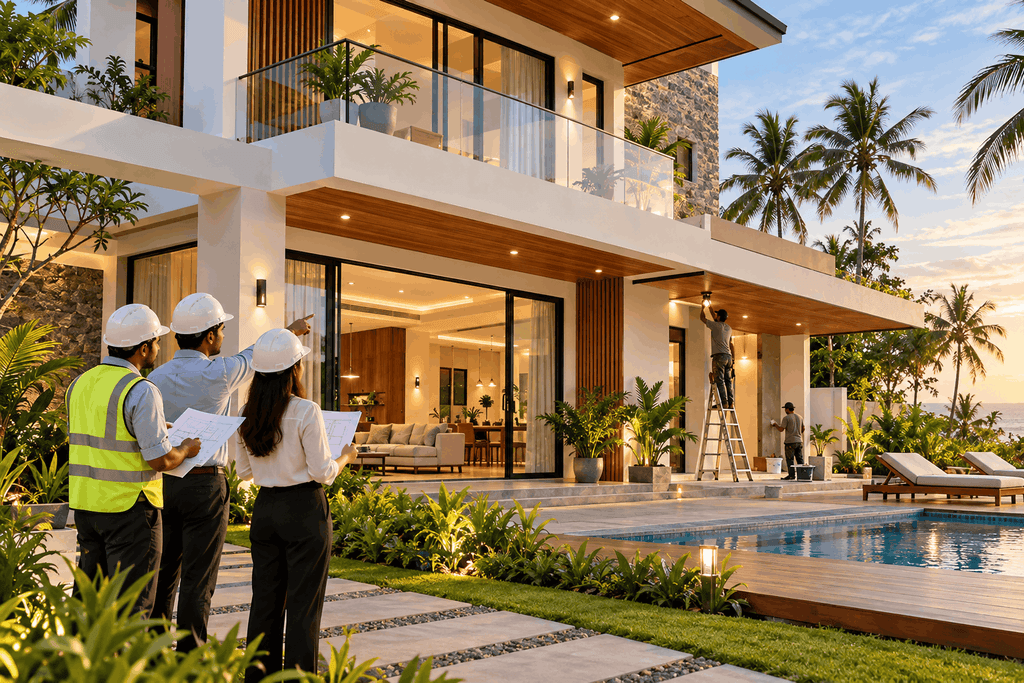
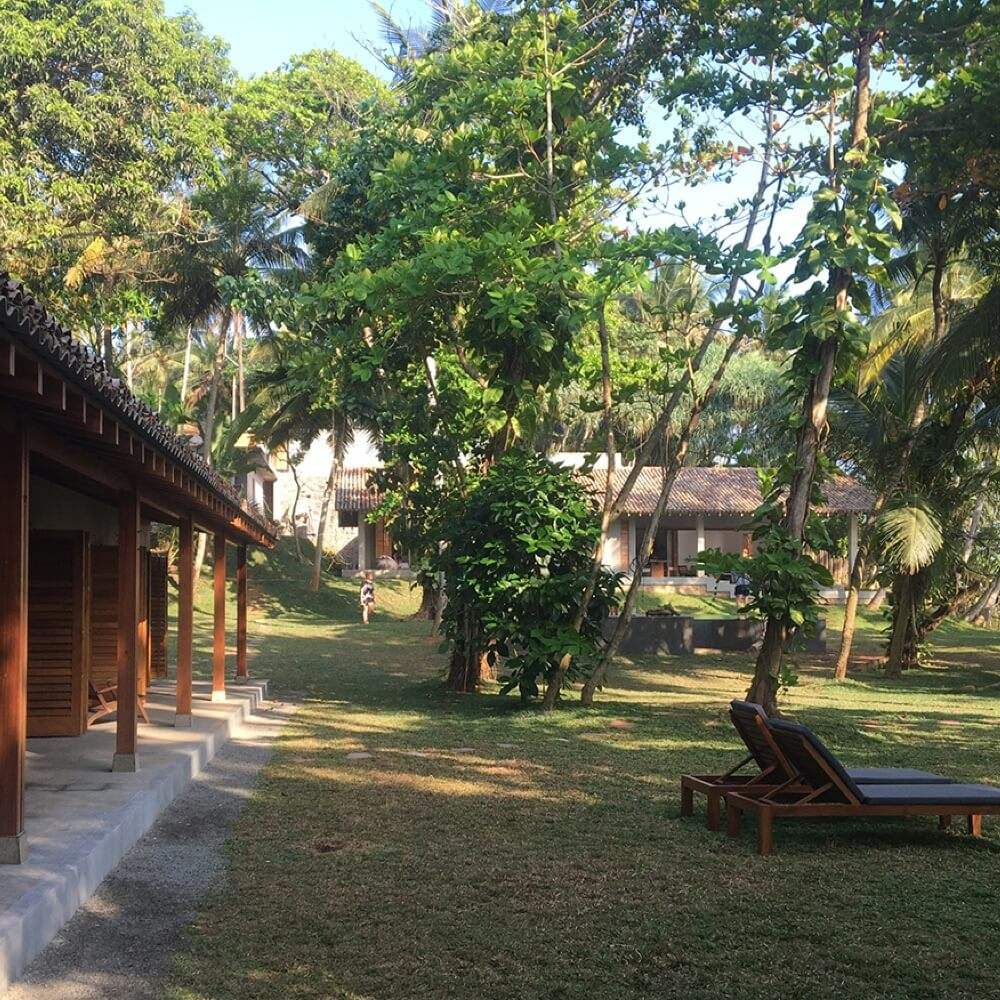
Plastering, flooring, tiling, joinery, ceilings, paint, fittings, and lighting provide the personality to the home. For luxury home construction in Sri Lanka, finishing quality is what the owner sees every day.
Driveways, boundary walls, gates, pools, drainage, outdoor lighting, and landscaping complete the building. Whereas for a beach villa or holiday home, the external works often provide the ambience as well.
Planting should be suited to the local climate and salt content in the air. Surface water from monsoon rains should be led away safely without undermining the building.
Prior to handover, the house is walked through room by room to check for all defects. All snagging items are recorded on a snag list and rectified. Water pressure, drainage, electrical circuits, fittings, and waterproofing are tested.
A meticulous inspection is always an excellent indication of a builder’s integrity.
Handover consists of keys, completion documents, and a systems presentation. But what happens next is equally important.
The above stages are the same irrespective of which builder you choose. The only difference lies in how joined-up it all is. Where design, engineering, estimation, and approvals all lie with different entities, every handover represents an opportunity for things to slow down and/or go wrong.
When shortlisting, ask every builder:
Knowing the stages of building a house in Sri Lanka puts you in control of the project. The right building construction companies in Sri Lanka will walk you through each one and stand behind the result. If you are planning a home or villa in the south, talk to Crystal Construction Consortium about your project.