How Building Construction Companies in Sri Lanka Work
Read Article
→

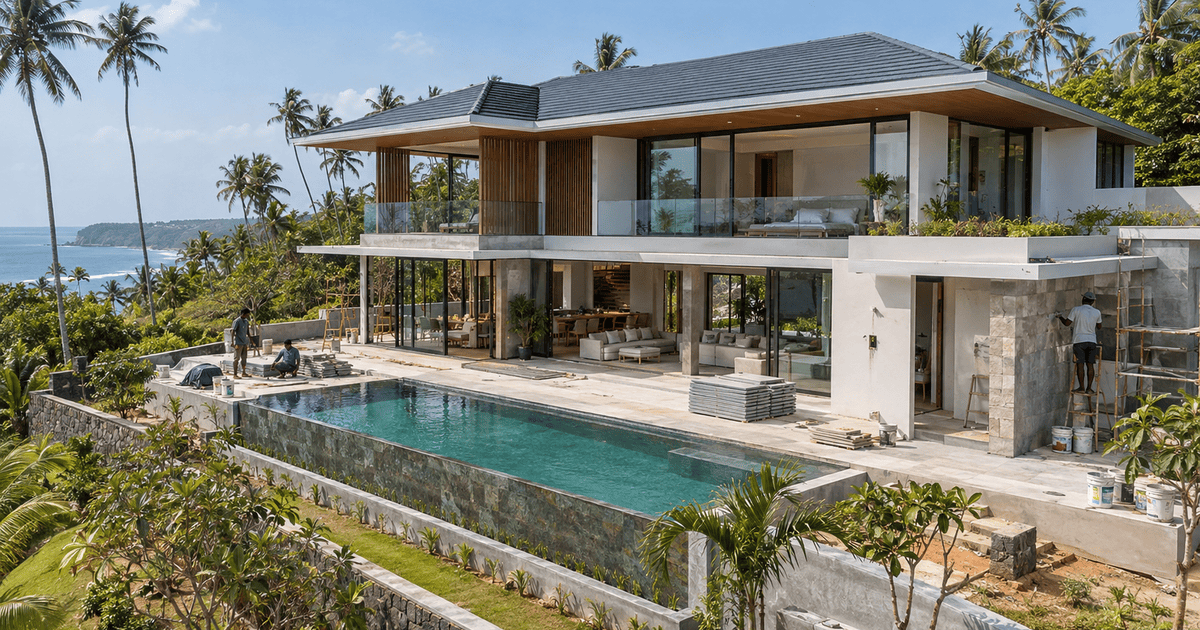
Building a villa in Sri Lanka is not a quick process. Approvals, ground conditions, monsoon seasons, and finish levels all shape the timeline, and the right construction company in Sri Lanka will factor them in from the start. Ignore them, and they quietly add months to the build.
Most villas take between 12 and 20 months to build from site visit to handover, with a period of between 9 and 14 months spent on site. This guide explores how time breaks down across the construction process, potential delays, and how to assess a construction company in Sri Lanka in preparation for the build. It is aimed at homeowners, property investors, and overseas Sri Lankans looking to build from abroad. Indicative timeframes apply to a standard three- or four-bedroom villa.
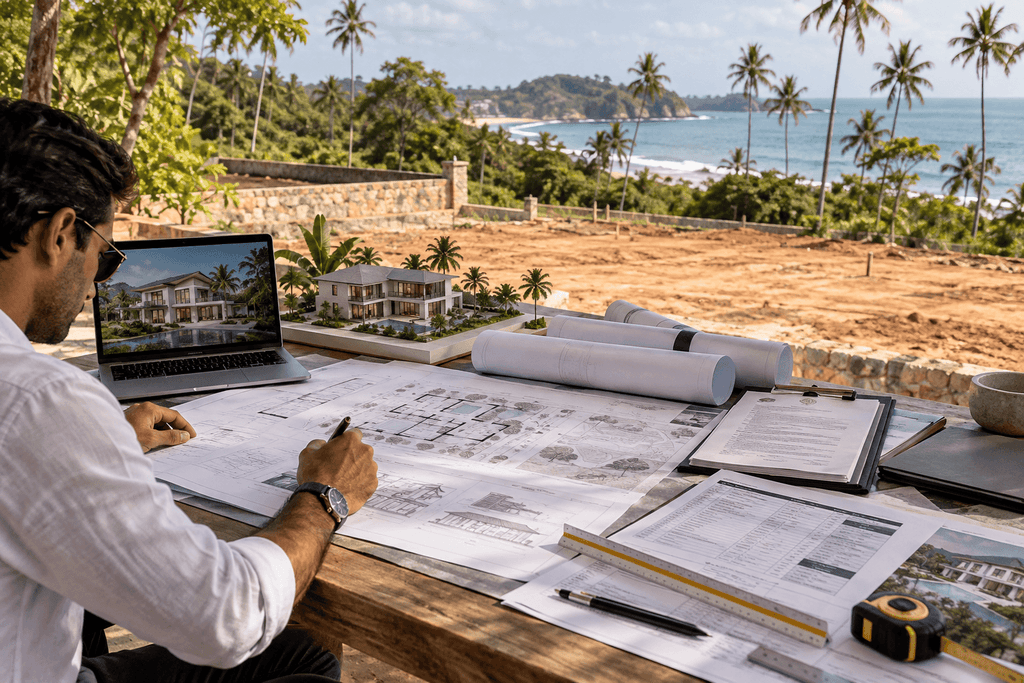
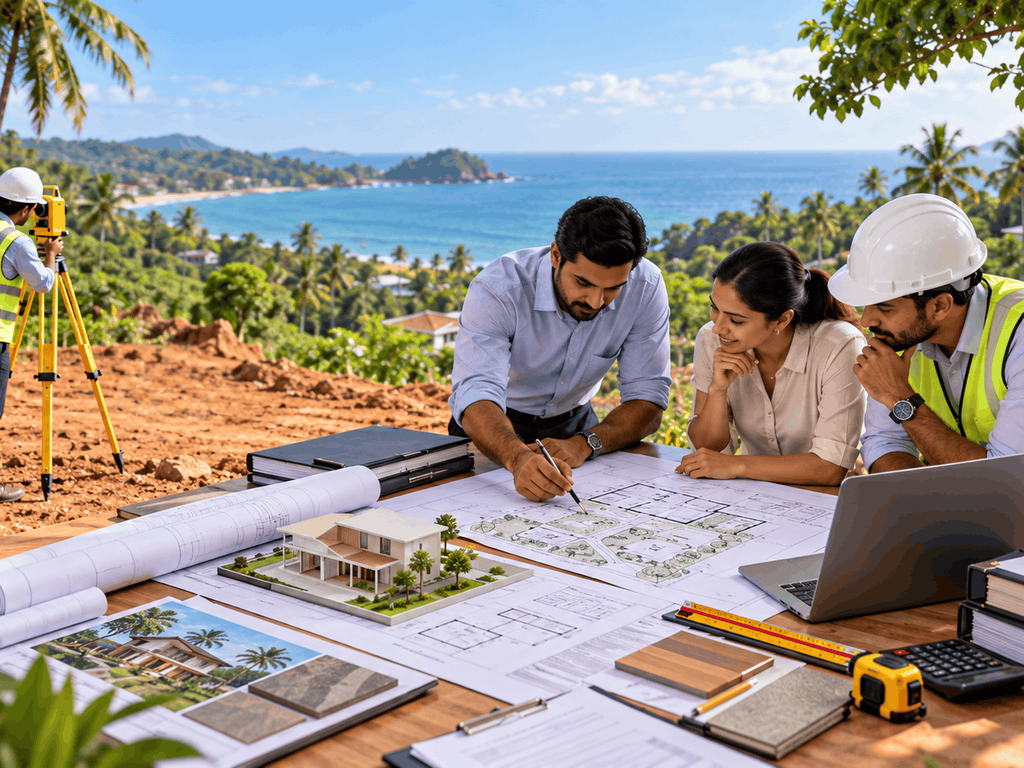
Architectural and structural design typically takes two to three months following agreement of the brief. It is an easy false economy to push for speed, as a change on paper is cheap and a change on site not so.
Overseas clients should factor in several rounds of drawings and agree on a regular meeting point to avoid delays.
A bill of quantities breaks down every material, quantity, and work item involved in the project. A detailed BOQ takes two to four weeks to produce and will be the foundation of a reliable budget.
When comparing quotes, ask if estimation is an in-house process.
Drawings have to be approved by the local relevant authority, with additional clearances applying to coastal or environmentally sensitive sites. Clearances can be a month or two on straightforward inland plots, but longer along the south coast.
Errors at this stage will incur delays, and for overseas clients, approvals are frequently the most frustrating part of the villa building process in Sri Lanka.
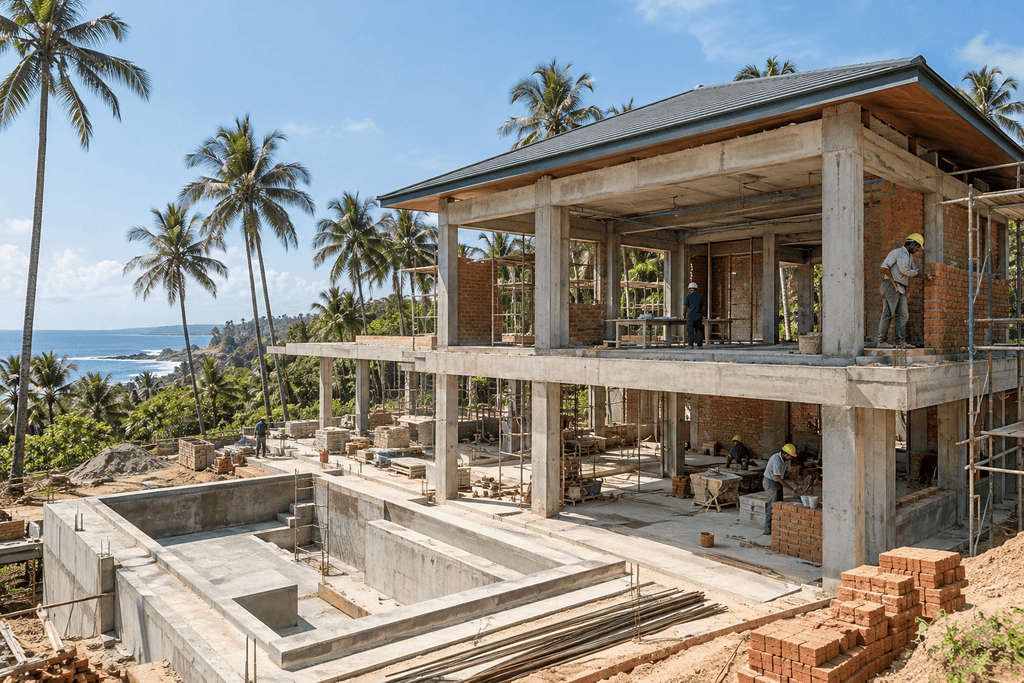
Clearing, setting out, and temporary works take a couple of weeks. Foundations take a month or two depending on ground conditions.
On the south coast, sandy soil and a high water table can require deeper or special engineered foundations. This process should never be hurried.
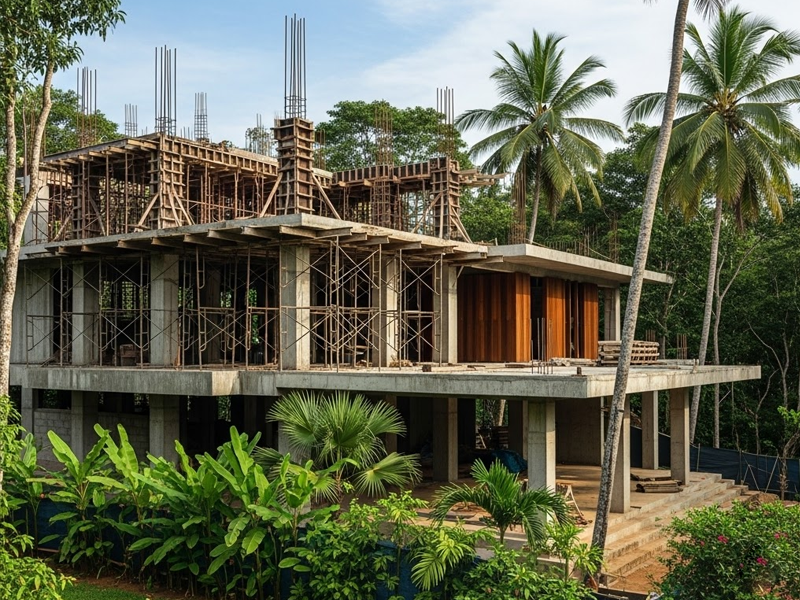
With columns, slabs, and walls up, the house really begins to take shape. At three to five months, this is the longest period of the build and sets the tempo for the phases that follow.
Roofing takes four to eight weeks. First fix plumbing and electrical work runs concurrently to the construction as the walls and slabs go up, and before they are boarded.
For villa construction in Sri Lanka, time must be provided for water storage, pumps, sewage systems, and backup power, particularly outside the main towns.

Plastering, flooring, joinery, ceilings, paint, fittings, and lighting are carried out over three to five months. This is where luxury villa construction in Sri Lanka becomes most different from a standard build. Natural stone, custom joinery, and imported fittings add weeks to the schedule, not to mention their own lead times.
Long-lead items should be ordered early. The most easily avoided delay on-site is waiting on the delivery of tiles.
Driveways, boundary walls, pools, drainage, and landscaping take another one to two months, often running concurrently to the interiors. For beach villas, the importance of landscapes can be comparable to the interiors.
The house is inspected room by room, defects noted on a snag list and corrected, and every system tested before handing over the keys. Allow two to four weeks.
For a more detailed breakdown of construction phases, see our guide to the [stages of building a house in Sri Lanka].
Few delays are the result of one major issue. Typically, a number of small problems combine to slow down a villa build.
On the south coast, working around the monsoon rather than through it is the simplest way to avoid delays.
The build runs through the same phases whichever builder you choose. What differs is how well they are coordinated. When the architect, engineer, estimator, and contractor are separate parties, every handover risks the schedule slipping.
When shortlisting, ask every builder:
A realistic program is one of the most valuable things a builder can give you before work starts. The right construction company in Sri Lanka will provide one and stay accountable to it. If you are considering a home, villa, or property investment, talk to Crystal Construction Consortium about your project.