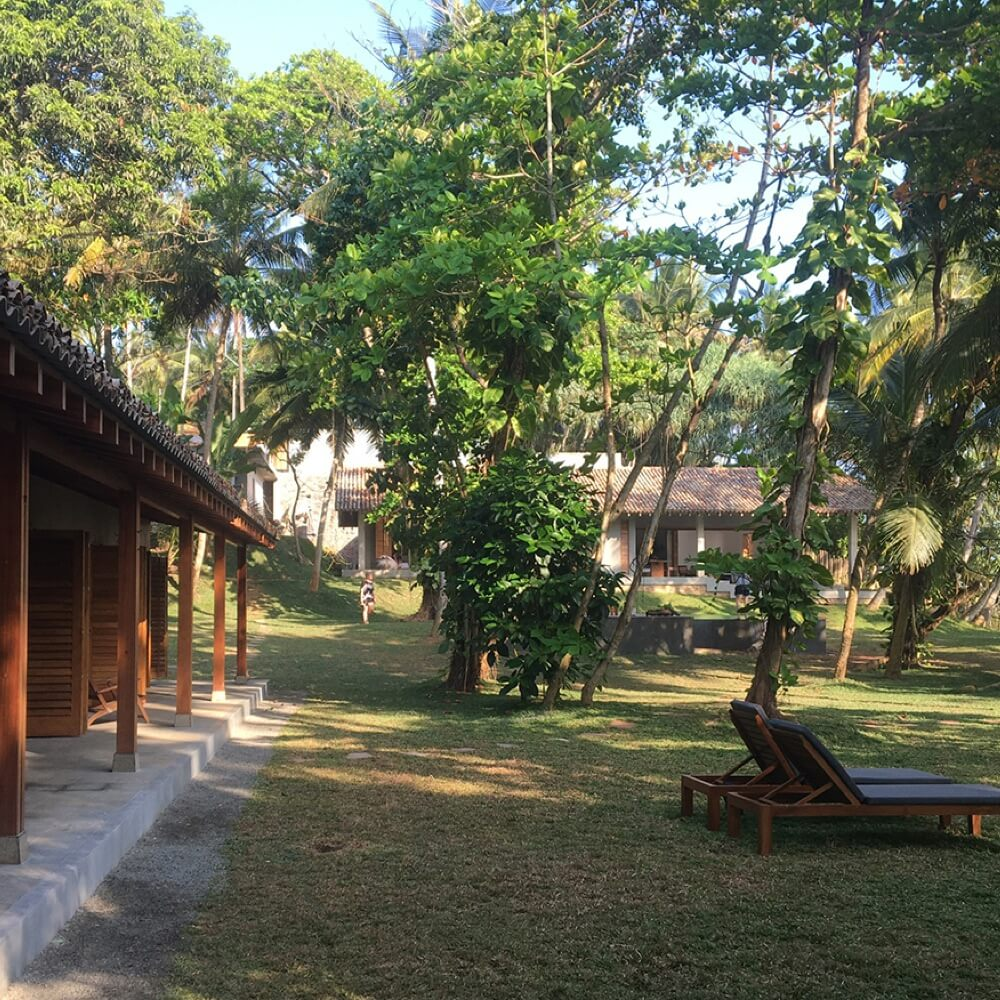
How a Construction Company in Sri Lanka Builds a Villa
Read Article
→

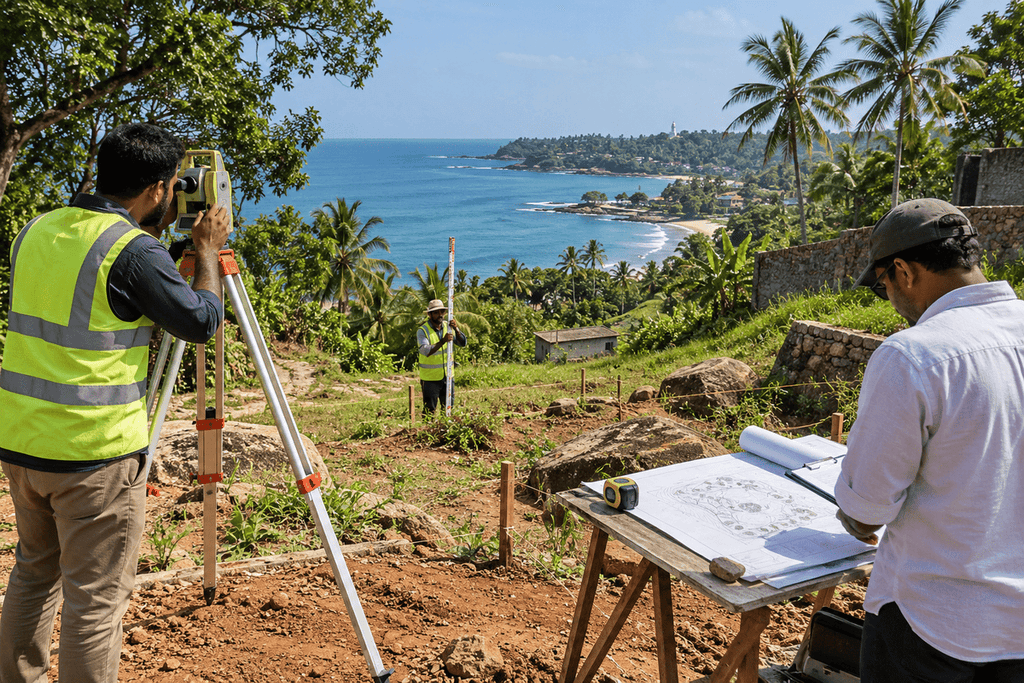
A site survey is a detailed measurement of your plot: its boundaries, dimensions, ground levels, slopes, access, existing structures, and drainage, recorded as a plan. Architects and engineers can’t design accurately for land nobody has surveyed, which is why experienced building construction companies in Sri Lanka ask for one before they commit to a design or a price.
This guide covers what a site survey includes, how it differs from a soil investigation, and what the consequences of skipping it are. It is intended for homeowners, property investors, and overseas Sri Lankans considering house construction in Sri Lanka and aims to explain why building construction companies in Sri Lanka use survey information before committing to a design or cost.
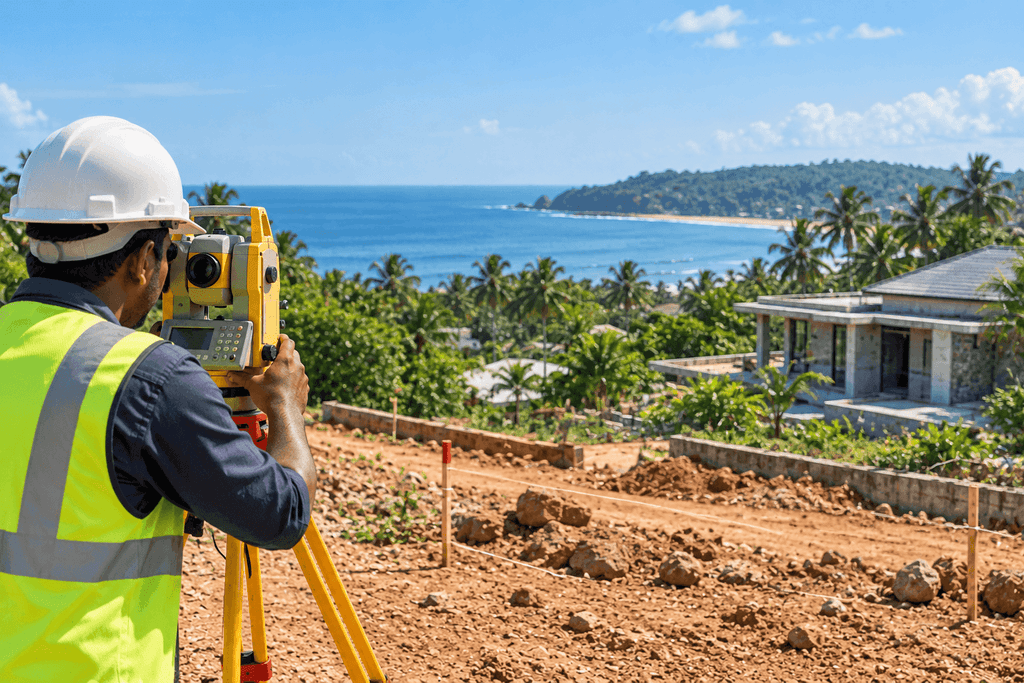
A site survey, sometimes called a topographical or land survey, is undertaken by a qualified surveyor, measuring the plot on the ground. The result is a drawing, to scale, which shows the conditions as they actually are.
Think of it as the starting point for the project.
The surveyor measures the plot’s edges and area and identifies the boundaries. This confirms the actual shape and size of the land you are building on, which may be different from what you were told.
This is always the first step of any land survey prior to construction.
The survey identifies the heights of the ground at various points across the plot. This provides information on how the land falls, where water will flow, and the amount of cutting and filling that will be required.
Slopes influence the location and levels of floors and whether retaining walls, steps, or driveways are required. A steep site can offer breathtaking views but needs to be designed from the outset.
The survey identifies the access routes to the plot, their width, and any constraints. A narrow access road can limit the size of vehicles and plants that can reach the site, which impacts cost, program, and access.
Old buildings, walls, wells, septic tanks, and large trees are recorded so the design can work around them or plan for their removal.
The survey identifies any natural drainage lines, low points, and areas where water is likely to collect. This is an essential part of site planning to protect the house for the long term.
Where applicable, the location of power, water, and other utility connections is identified to inform the services design.
Adjoining roads, neighboring properties, and the state of surrounding land all influence the design, from windows to privacy to construction access.
These two terms are often confused and are not the same thing.
A standard site survey does not establish soil bearing capacity and should not be taken as a substitute for a geotechnical investigation or the structural engineer’s input. Both are important and should be conducted prior to finalizing the design.
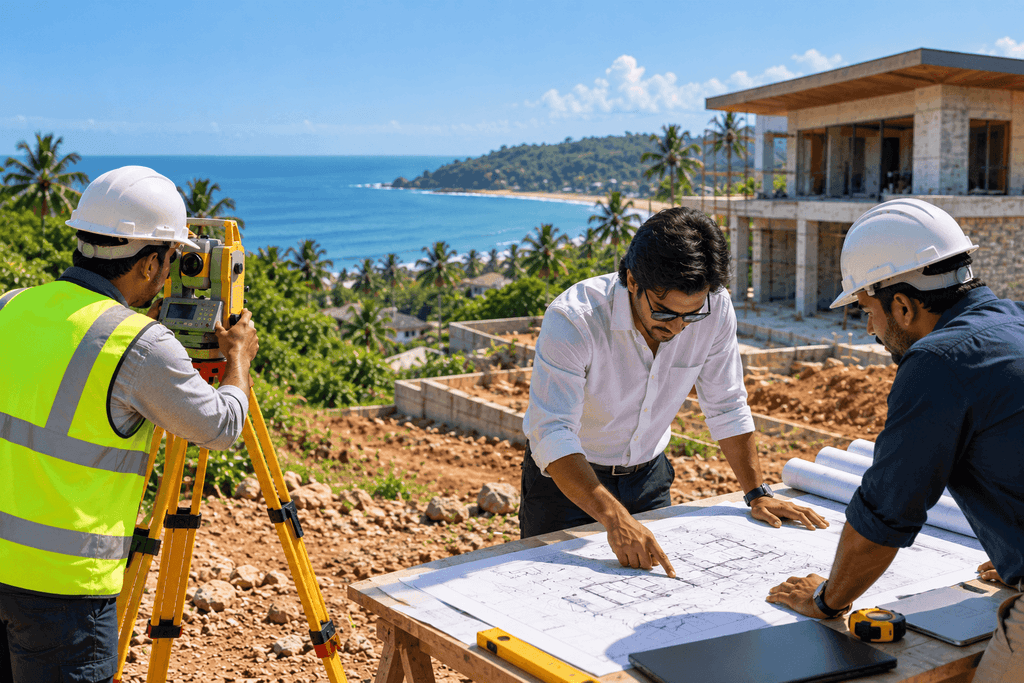
Architects use the survey to locate the house, set the floor levels, and design the layout to work with the land. Structural engineers use it, together with soil information, to design foundations and any retaining structures. Estimators use it to cost earthworks, drainage, and access.
Site conditions directly influence the design: a sloping plot can suggest a split-level design, low ground may require raised floors and good drainage, and a narrow access road can dictate the method of delivery.
Having accurate information at the outset means fewer design changes and surprises during the building process of a house in Sri Lanka.
Not all of these will apply to every project, but here are the potential consequences:
Most of these issues are inexpensive to avoid on paper and expensive to remedy on-site.
Plots in Galle, Unawatuna, and Mirissa are rarely simple rectangles on flat ground. Many are sloped, irregularly shaped, or close to the coast, where drainage and ground levels need extra care.
On sites like these, a thorough site inspection before construction becomes even more valuable. It is also sensible to check, early, any coastal or environmental conditions that apply to the plot with the relevant authorities.
Contractors, architects, structural engineers, and project managers: Each makes key decisions based on the same information, and if that information is incomplete or scattered between different parties, mistakes cascade from drawing to site.
Crystal Construction Consortium was established in 2012 and is based in Unawatuna, Galle. It specializes in the construction of luxury homes, beach villas, and other upscale projects, with particular expertise in building homes in the south of Sri Lanka. High-end materials and international construction standards are used, and design, structural design, interior design, BOQ/estimation, and council approvals are coordinated by its project management from land acquisition through to construction and handover.
For clients and investors who manage the project from overseas, that kind of coordination is invaluable. Having just one party with access to the same site information means fewer pitfalls when details get lost in the process.
When speaking to any construction company in Sri Lanka, ask these questions:
A survey is as good as the action taken on it. The sensible steps following a site survey are
A site survey is one of the low-cost, high-value items in any build. It provides the design team with an accurate view of the land so that decisions are based on reality rather than preconceptions. This is especially important for villa construction in Sri Lanka and other upscale projects on coastal or sloped land.
The right building construction companies in Sri Lanka will request it at the outset and use it throughout. If you are considering a home, villa, or property investment, talk to Crystal Construction Consortium about your project.